Free SPECS professional workbook
Accreditation Readiness Self-Check
Take an initial, structured view of accreditation evidence, identify areas requiring attention and prepare a focused readiness conversation.
About the tool
A practical working resource for evidence-led improvement.
An evidence-led institutional self-assessment tool that helps universities examine their readiness against an agreed accreditation or external-review framework. It distinguishes evidenced implementation from intention and converts identified gaps into prioritised actions across governance, academic standards, quality assurance, student outcomes, staffing, evidence management and demonstrable improvement.
Inside the workbook
What the tool provides
The workbook combines structured questions, traceable evidence and accountable follow-through in one editable working format.
- 0135 diagnostic questions
- 02Seven institutional quality domains
- 03Expected-evidence guidance
- 04Four evidence-based response categories
- 05Evidence ownership and location
- 06Priority and action fields
- 07Automatic domain-level summary
- 08Six evidence-quality tests
Fictional worked example
See how the workbook works
The images below use fictional institutional information to demonstrate the workbook’s structure, evidence trail and management summary.
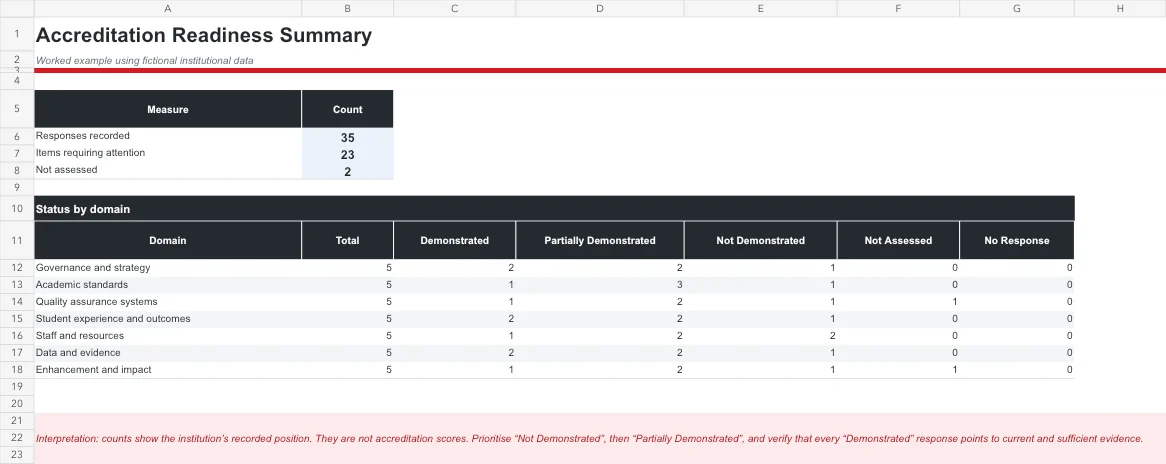
A clear institutional view of demonstrated strengths, partial assurance and areas requiring further evidence or improvement.
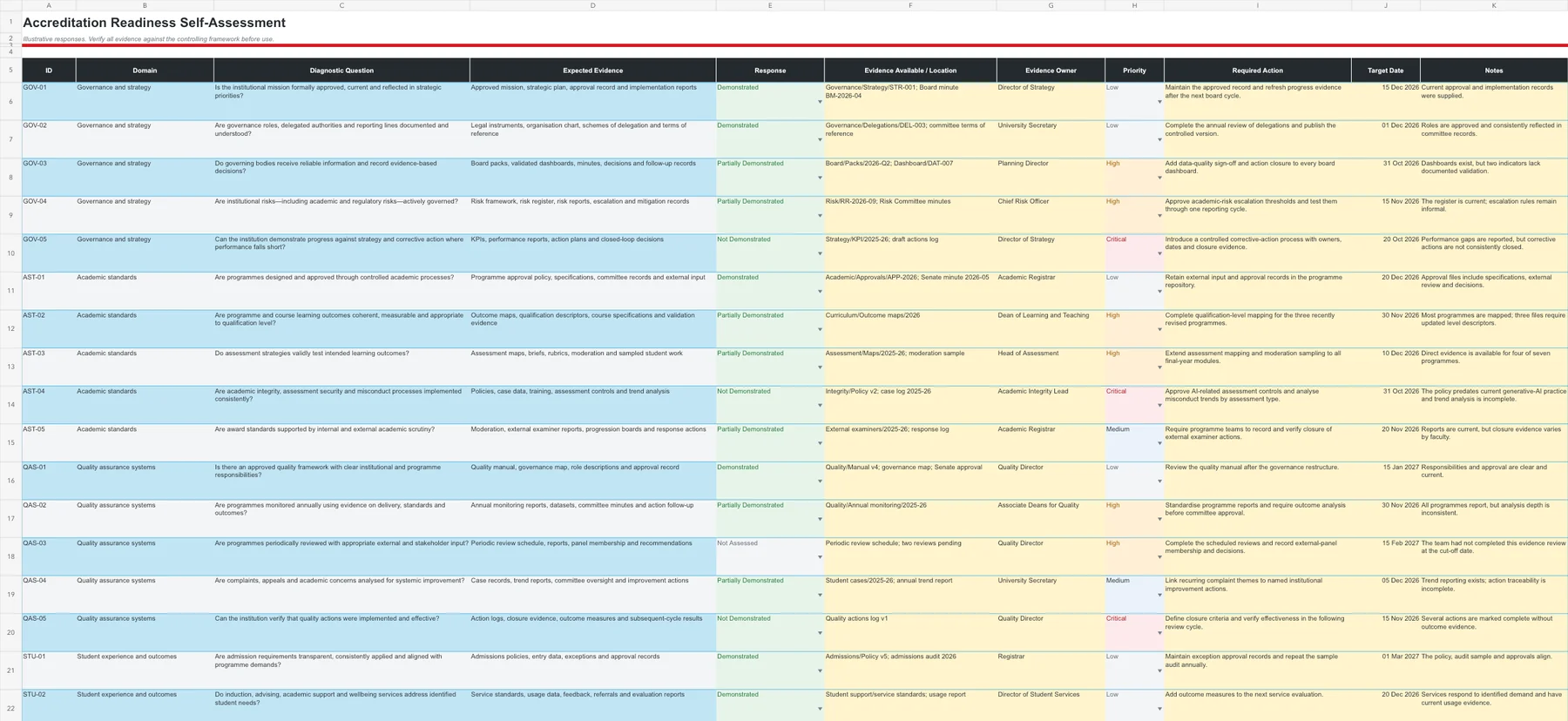
Every readiness judgement is connected to identifiable evidence, an accountable owner and a defined improvement response.
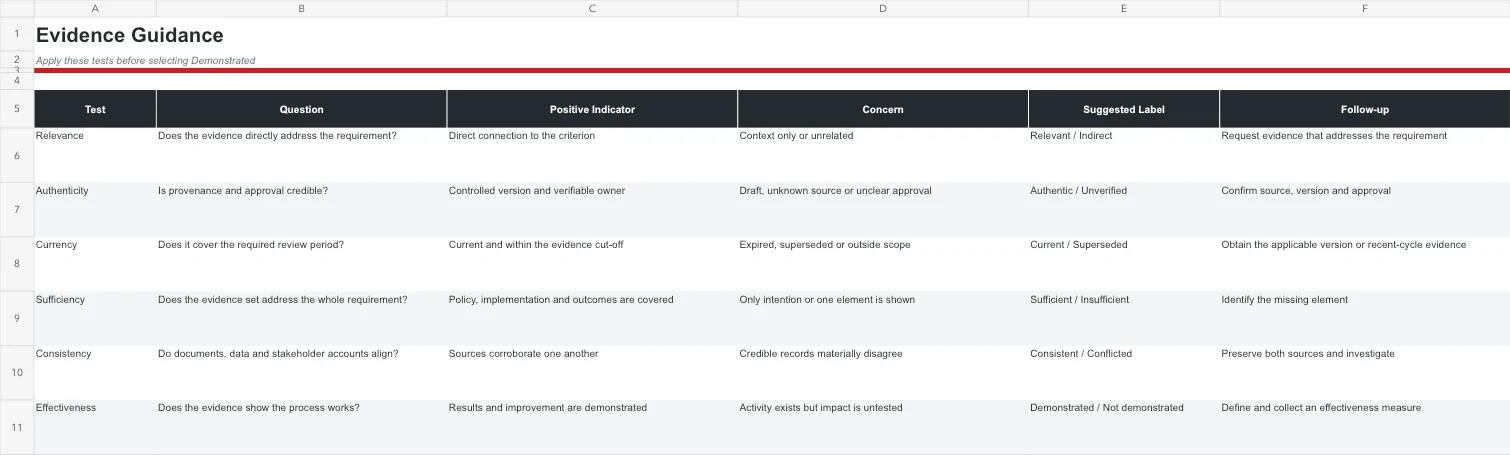
The guidance helps institutions move beyond document collection towards demonstrable institutional assurance.
Illustrative use only. The examples do not represent a real institution, accreditation judgement or regulatory decision. Each workbook must be aligned to the applicable framework and reviewed using qualified human judgement.
Before you download
Tell us who will use the resource.
We use verified-email access to protect SPECS intellectual property and maintain a proportionate record of professional requests.
- Names and professional roles accept letters and standard punctuation.
- Country is selected from a controlled list.
- Email and telephone numbers are checked for valid structure.
- Marketing permission is optional and separate from access.